Latest Posts

Ukraine House community mosaic

In March 2025 we ran 2 workshops with the Ukraine House community to draw designs and later built them as mosaics.

The idea was to create a map of the beautiful embroidery of Ukraine as a mosaic mural. I was thrilled by this commission as I lived in Ukraine between 2006-12 and could experience their rich culture in embroidery.

Now during the time of war in Ukraine, I had never been able to express my sorrow enough about not only the loss of lives but also of hand crafted items like embroidered garnment, handcarved ornaments on houses and churches and of course the flagship of Ukrainian artisanal mastery – Pysanky eggs.

But the patterns are still alive! In books, in the memory of people and in objects that survived destruction.

In this project we literally set in stone 25 embroidery patterns each one depicting a region of Ukraine.
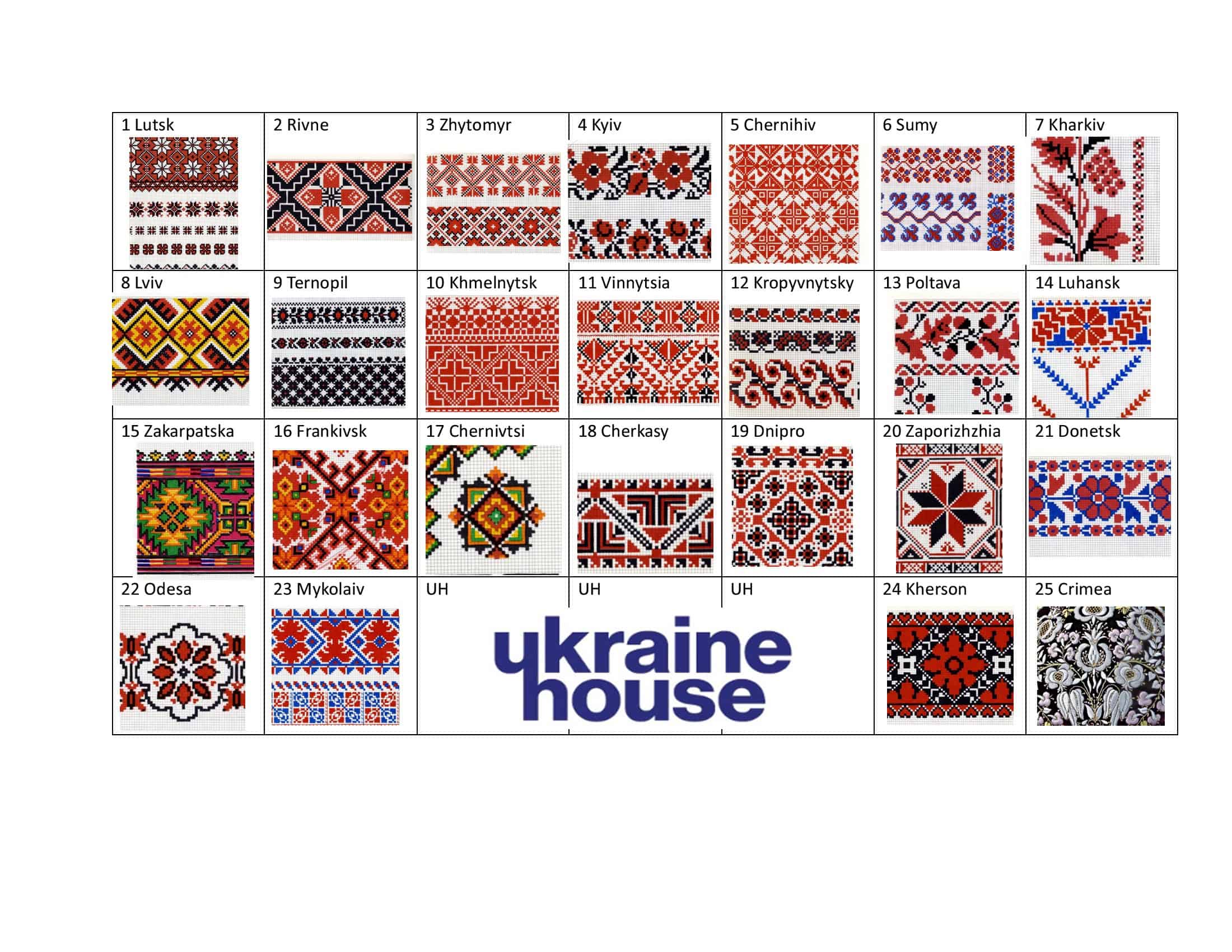
Map of designated embroidery patterns by region

Nearly 30 people came to draw and later built these patterns with small kizment glass tiles.
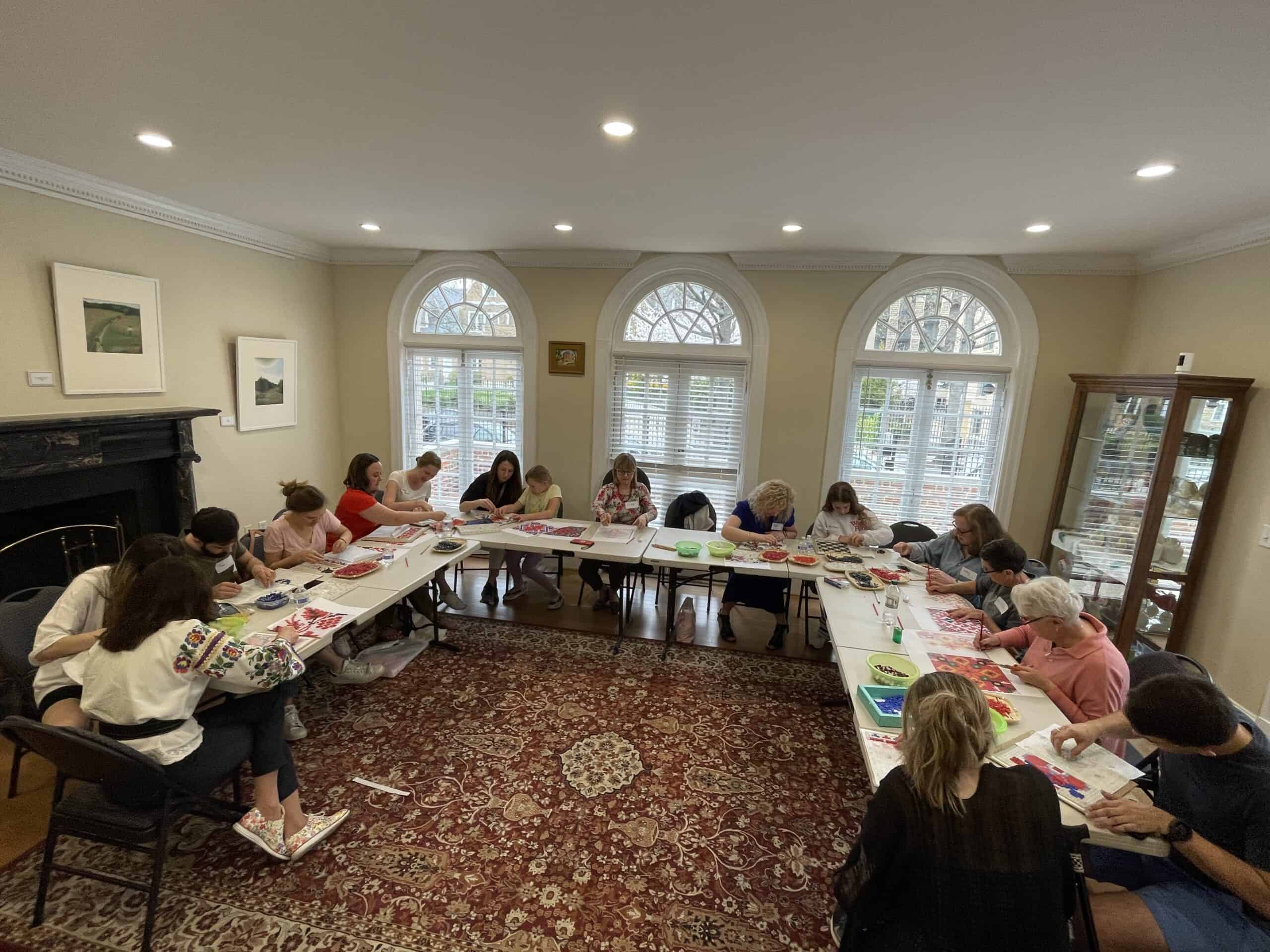
Mosaic Workshop with friends of Ukraine House .
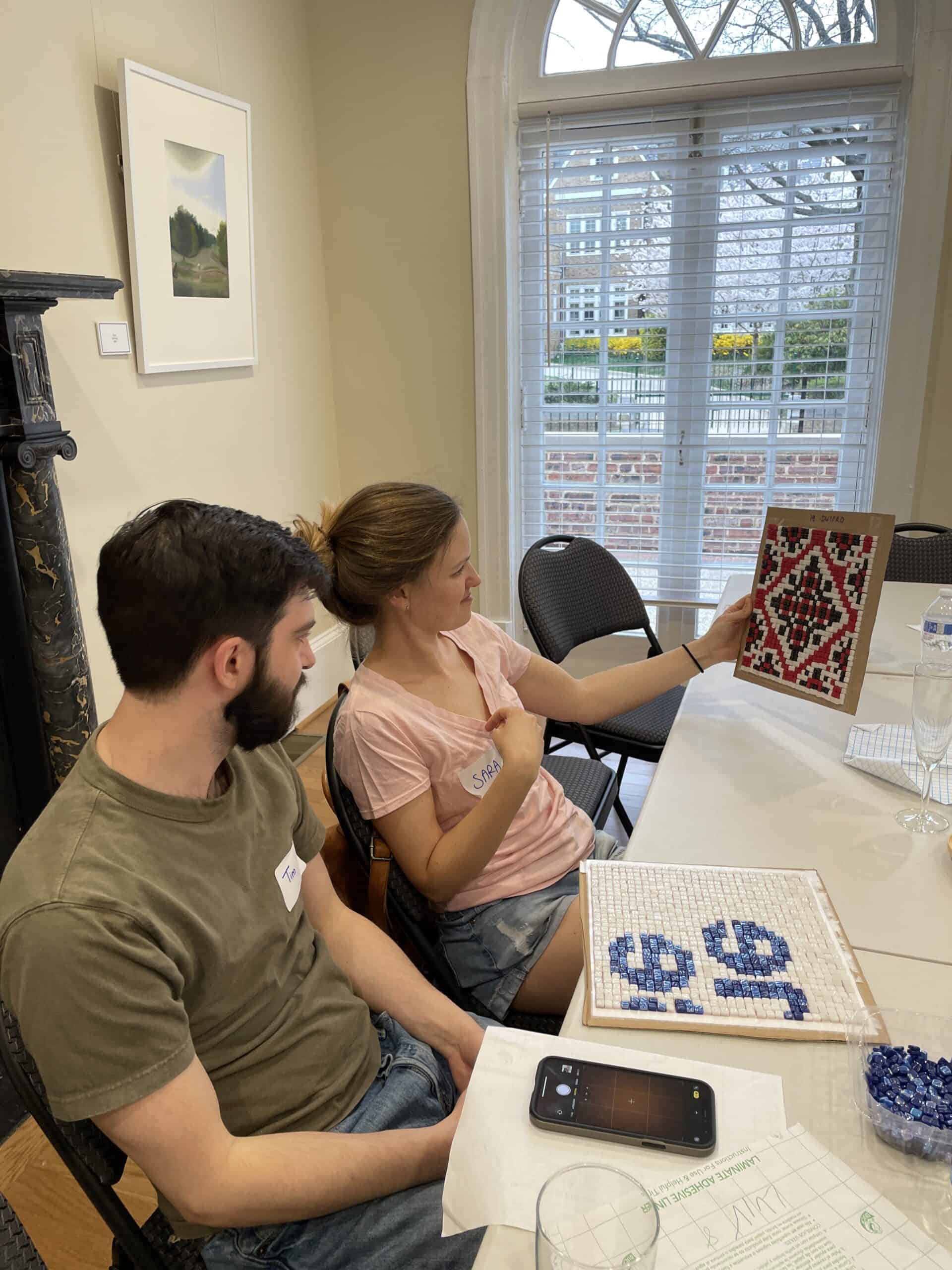
Admiring what was created in 3h of work.

Participants were not only Ukrainian nationals. I met a young reasearcher who researches on Ukraine and felt it enriching to study not only numbers but also patterns of Ukraine. A group of 3 mosaic artists joined being firstly interested in the craft and learning through the project about the rich culture of the country.
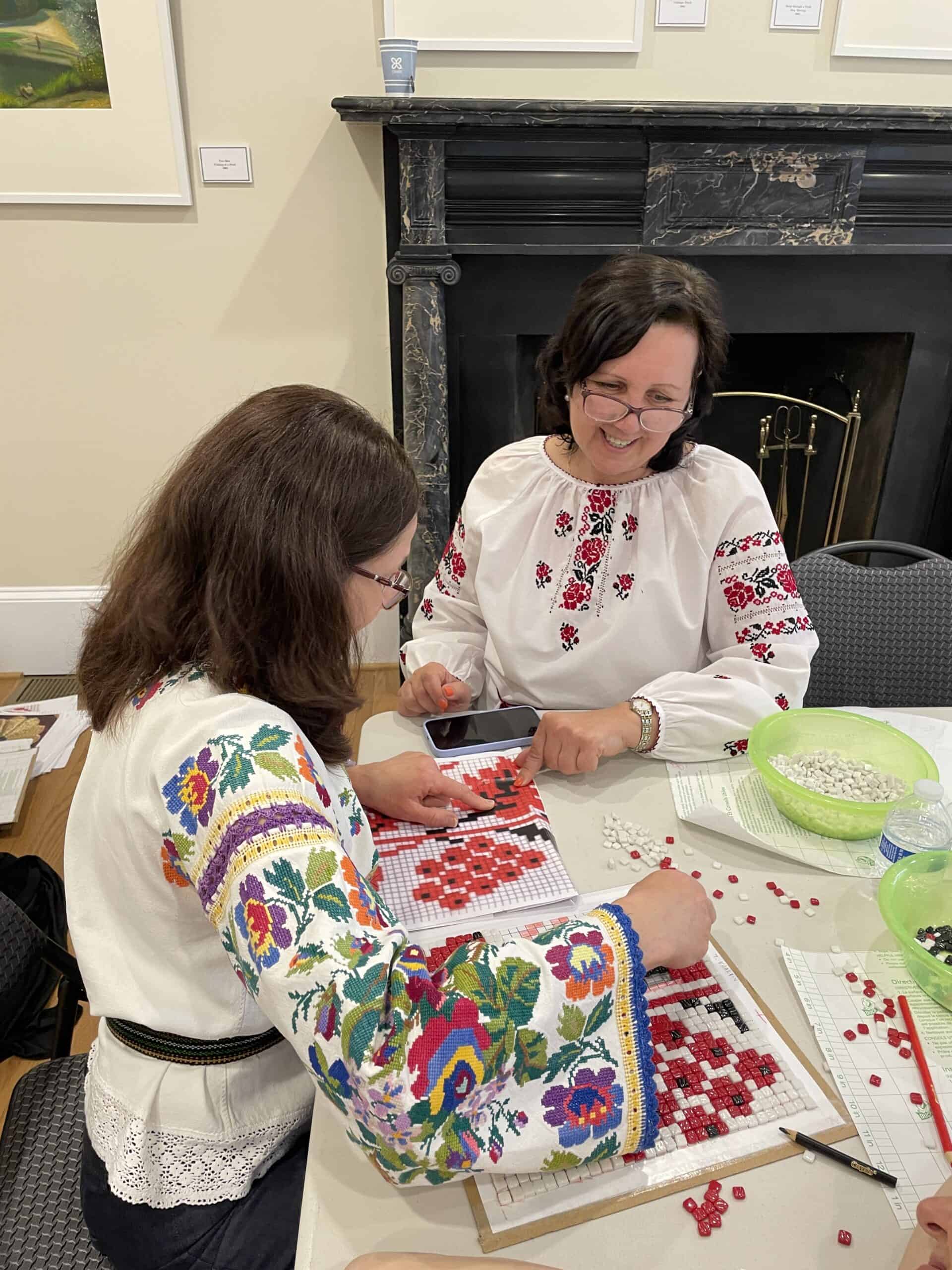
The flowing embroidery designs on Ukrainian blouses are turned into solid mosaic.

For myself it was just a very valuable time to facilitate this project and experience the Ukrainian heritage again with my hands eyes and social interaction.
Ukraine House Mosaic Installation

End of April 2025 was dedicated to the installation of the Ukraine House Mosaic – a Map of Embroidery of Ukraine.

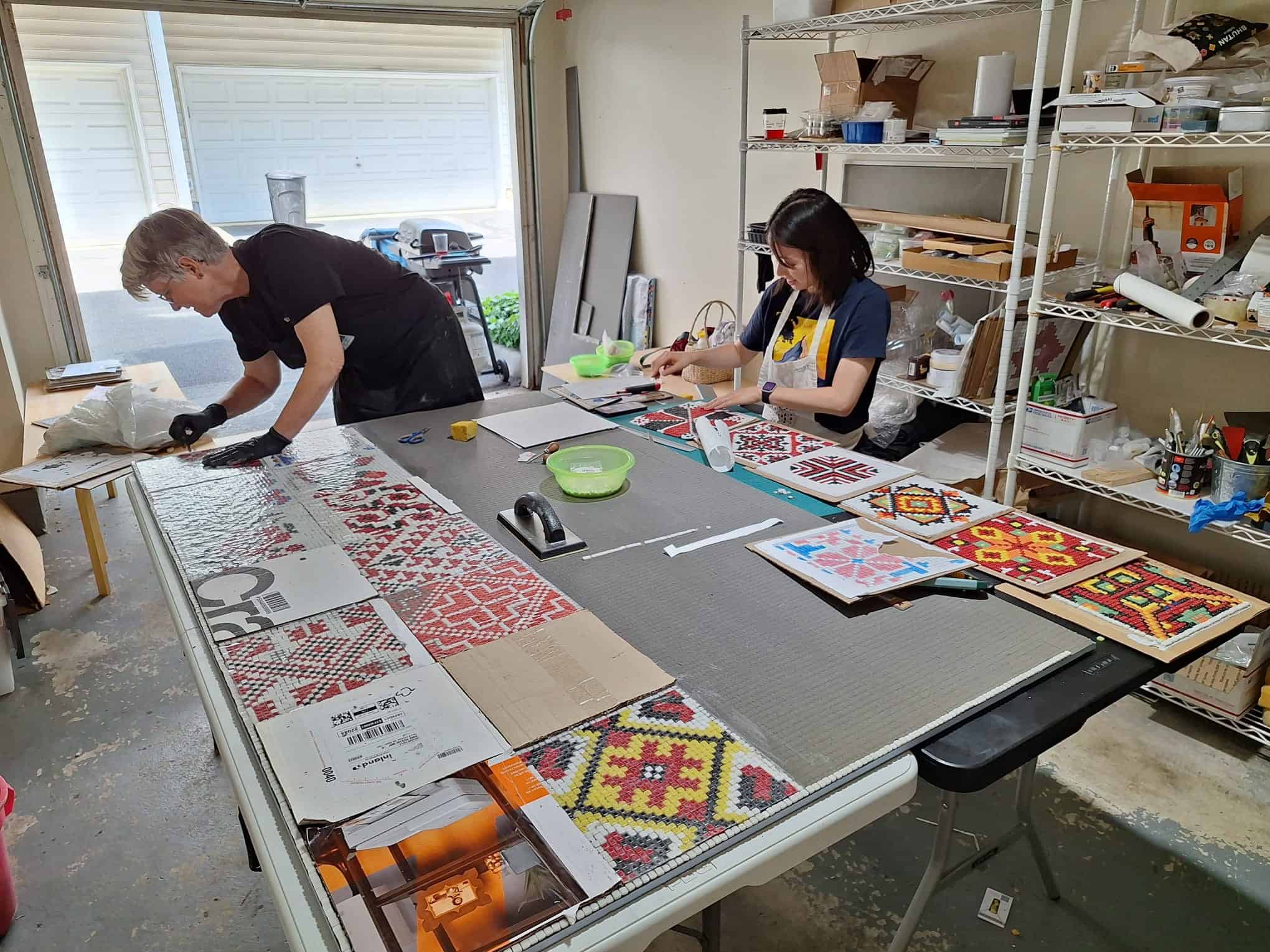
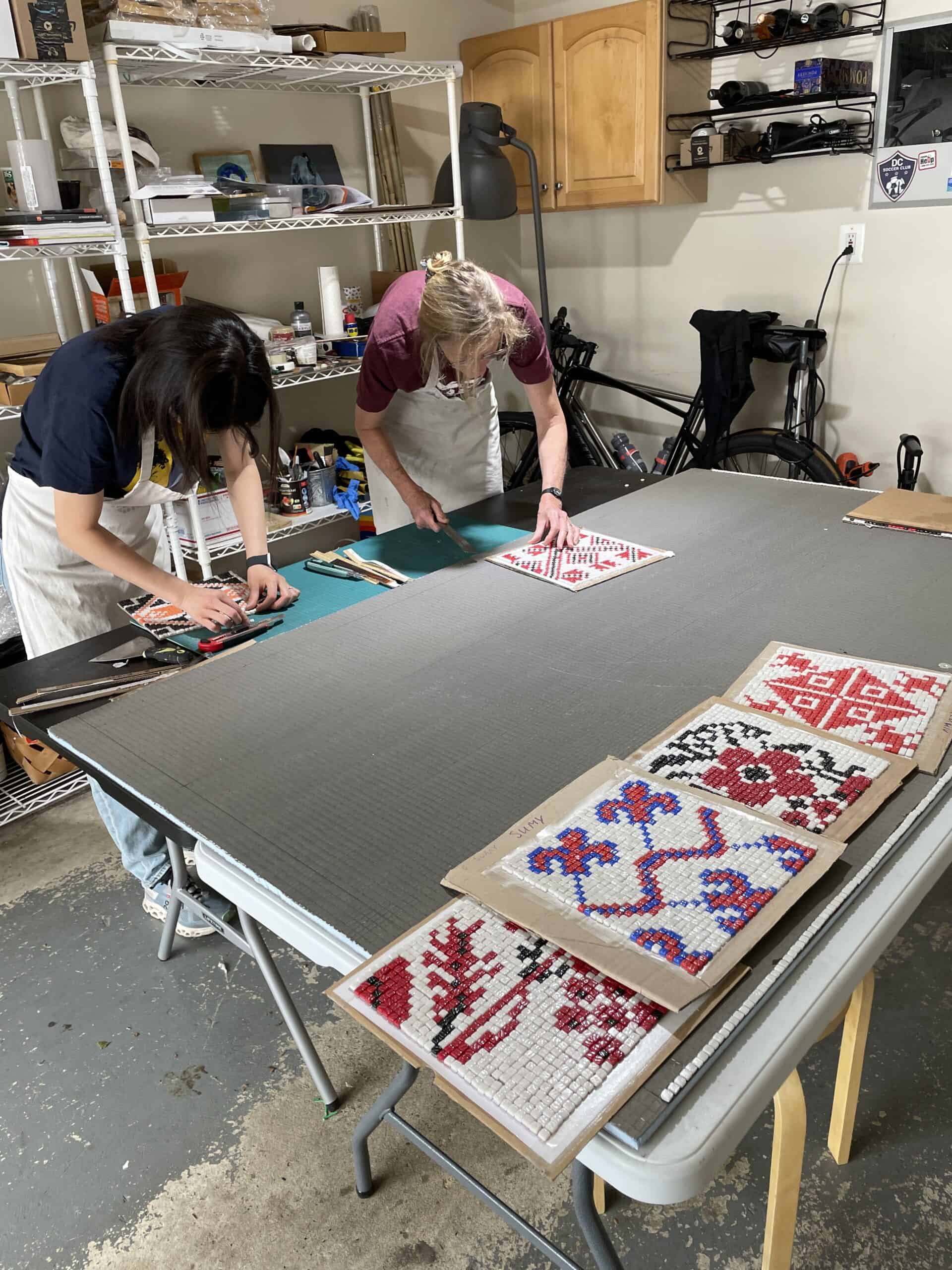
MosaicMoments team was in great action to pick up the 28 tiles from Ukraine House and mount them to the Wedi Board in my workshop.

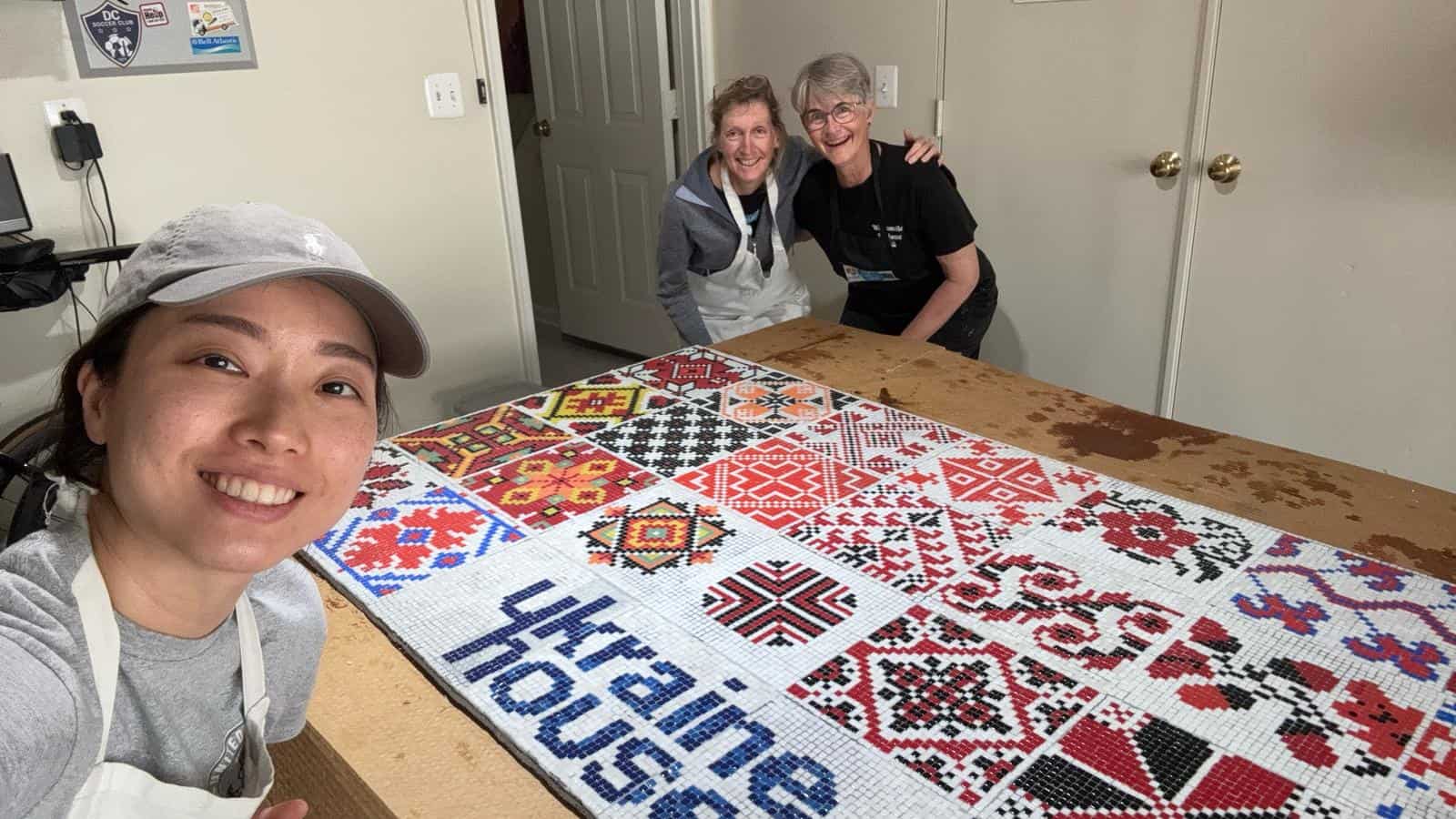
It is a joy to have Kim and Erin in the team. Working together is so much more fun. Problem solving is also better done in a team as there are three brains available to find solutions.

Kim and Erin preparing the mosaic tiles to be glued onto the board.

Glueing mosaic squares to the board with Erin and Kim.

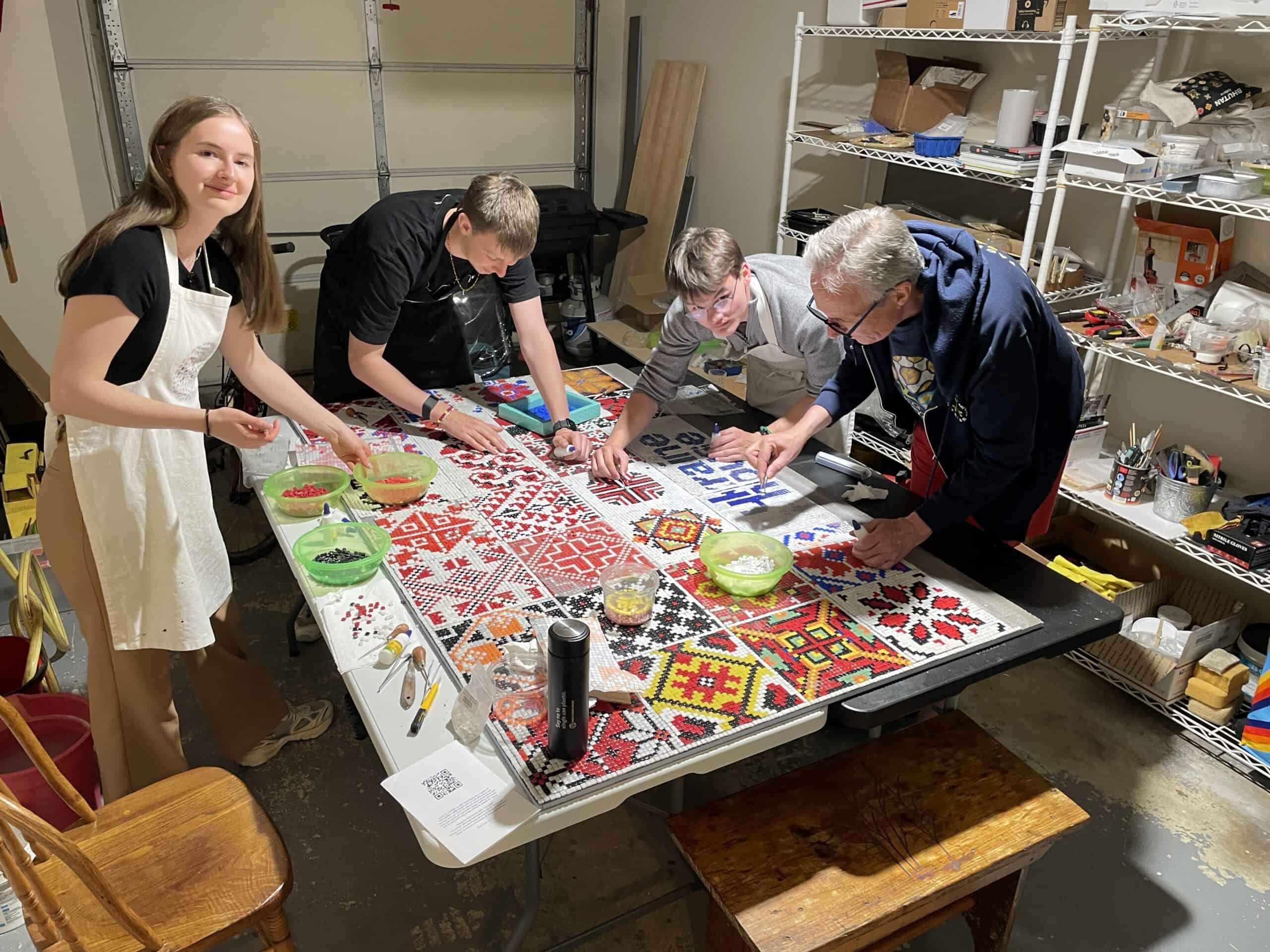
The glue I chose unfortunately didn’t stick all the mini tiles down. My nephew Cornelius, who was in town for a seminar, came to the rescue and brought two friends for a night shift to repair the mosaic.

Soo happy with Kim and Erin about finishing the mounting of the mosaic squares on the third day.

…. And a Magic Garden in Philadelphia

Visiting friends and relatives in the USA is always a good opportunity to discover with them the mosaic treasures of their place.

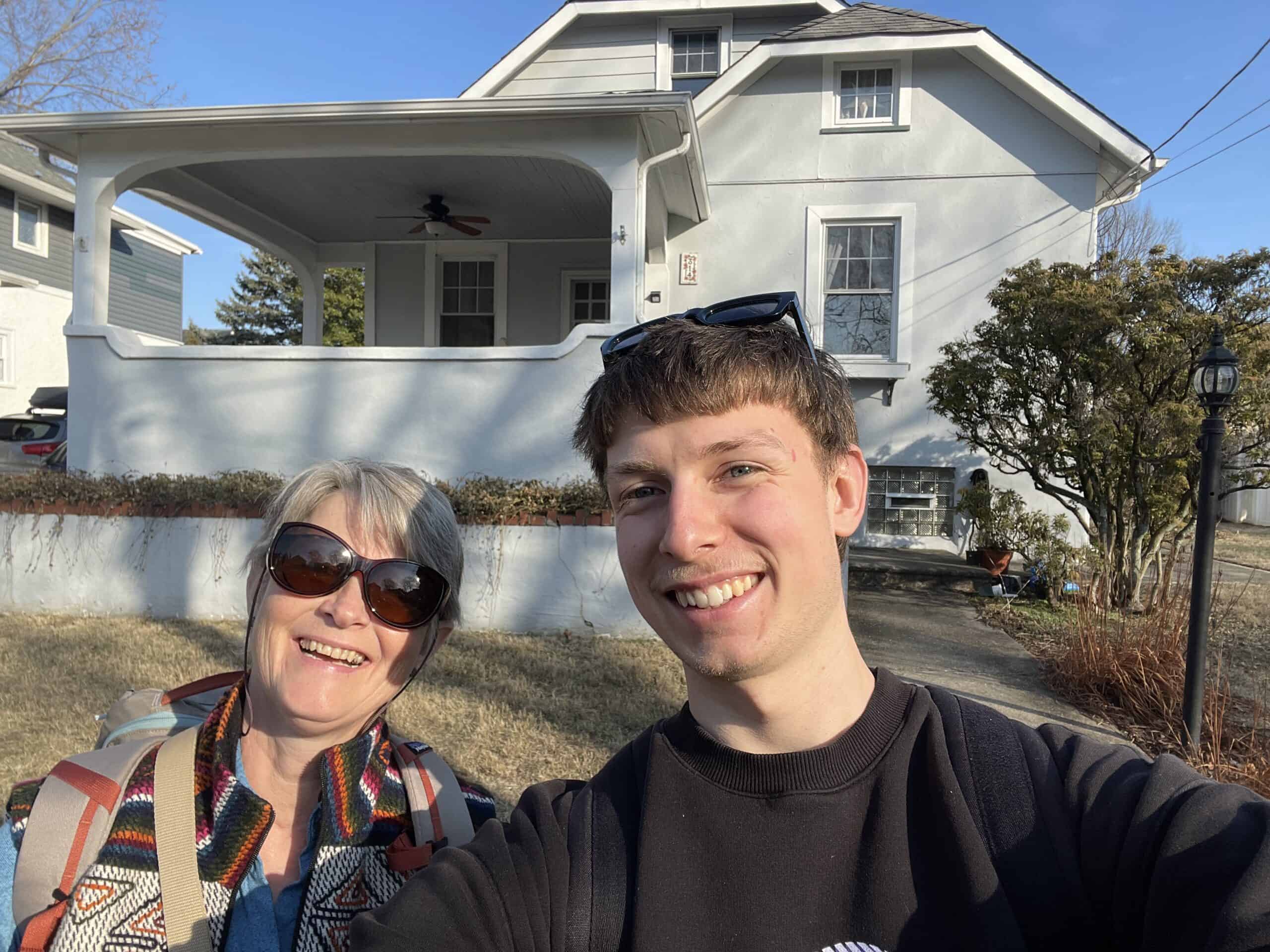
This time I went to visit my nephew Cornelius in Philadelphia where he is doing a gap year for Action Reconciliation Service for Peace in a social project that cares for immigrants in Camden near Philadelphia.

He was happy to tag along a tour of mosaics in Philli.

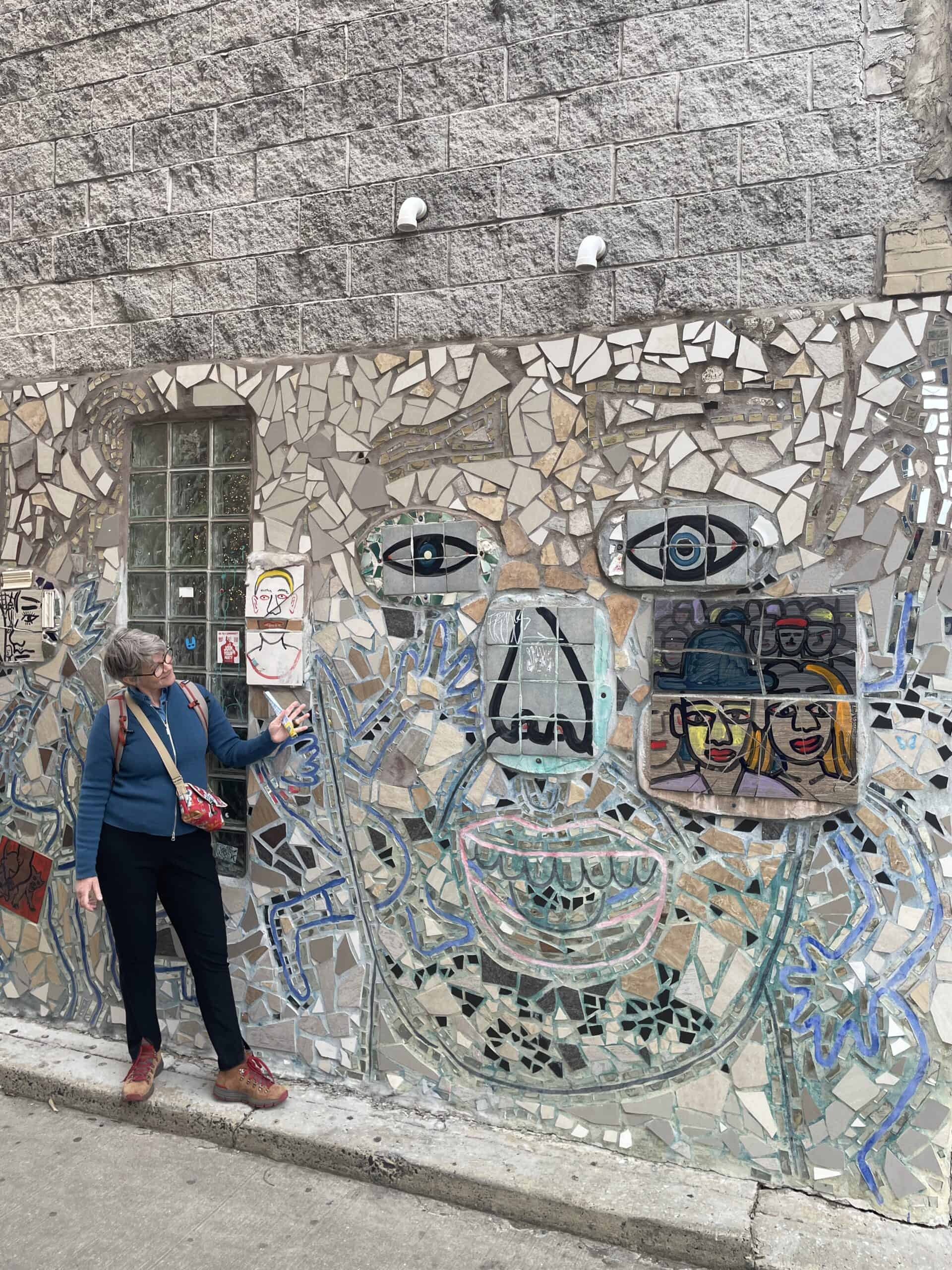
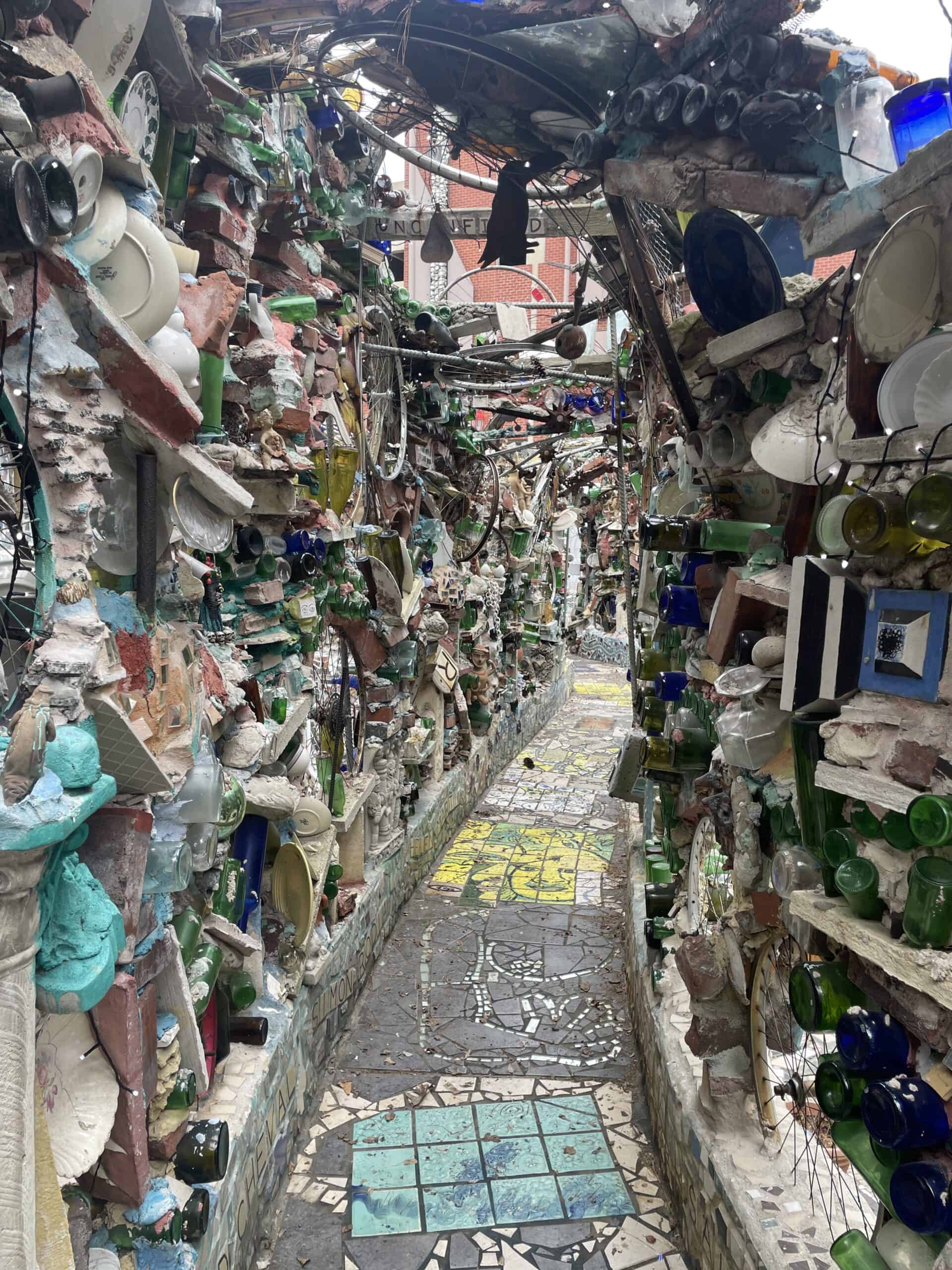
First we visited the “Dream Garden” (see previous blog) and then went on to the “Magic Garden” of this otherwise very urban city centre full of beautiful art deco and newer buildings.

https://www.phillymagicgardens.org/about-philadelphias-magic-gardens/themes/

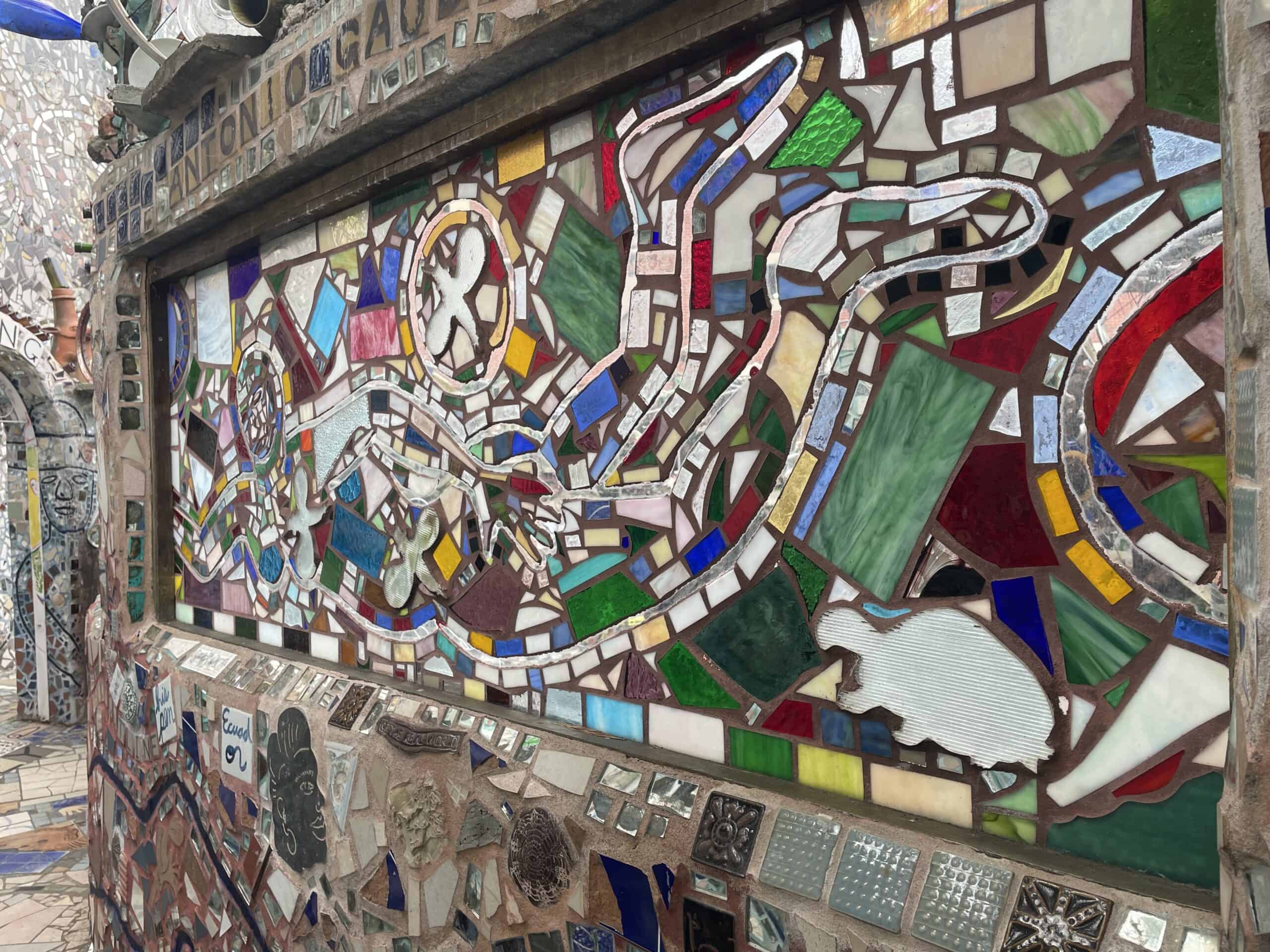
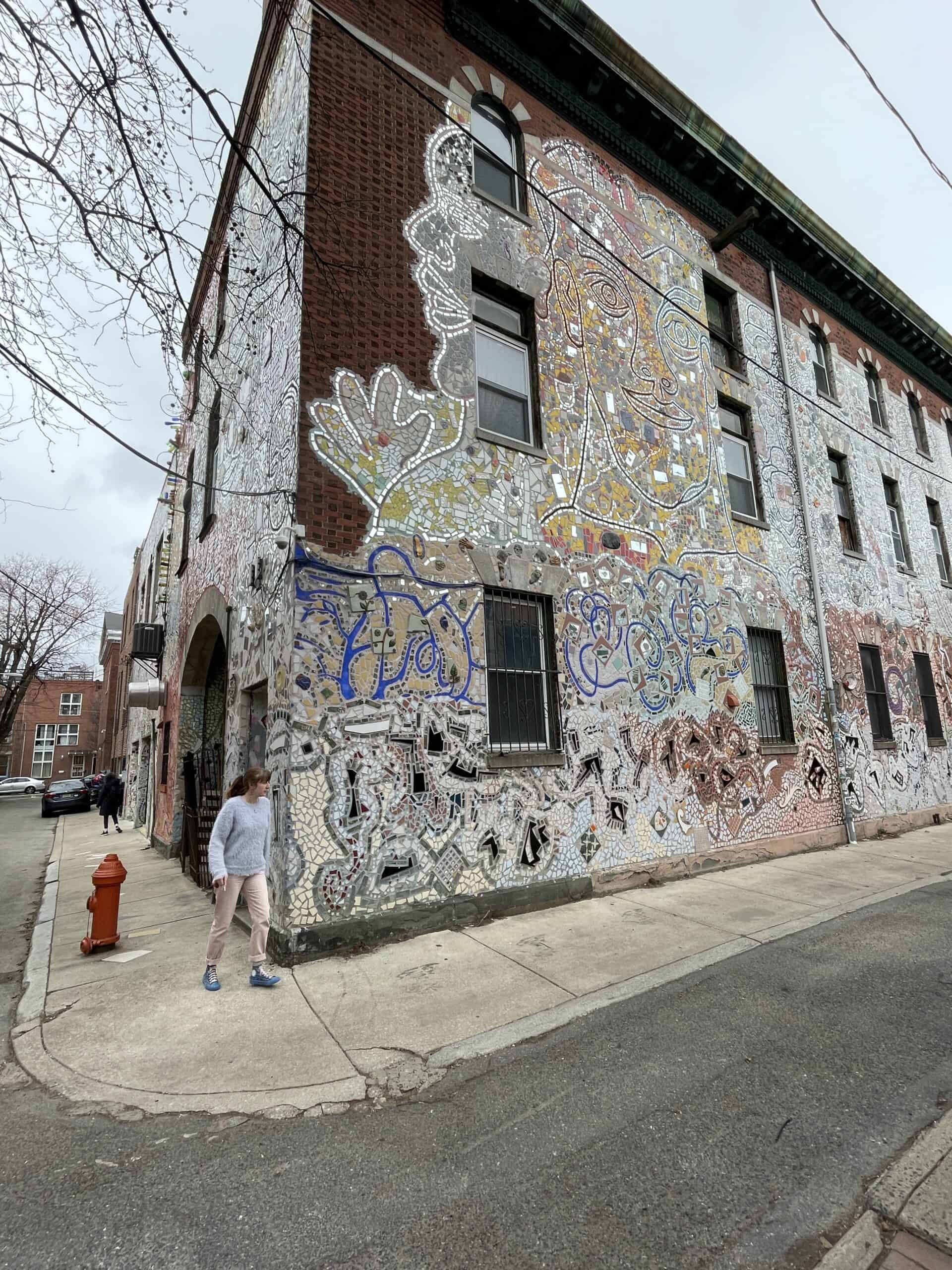
Magic Garden is a life long project of Isaiah Zagar who used the work initially as therapy from a mental break down.

The Magic Garden is a project classified under the term “ Art environment”. It’s now a foundation and we could even join a tour of this crazily busy mosaic project.

What drew my attention?

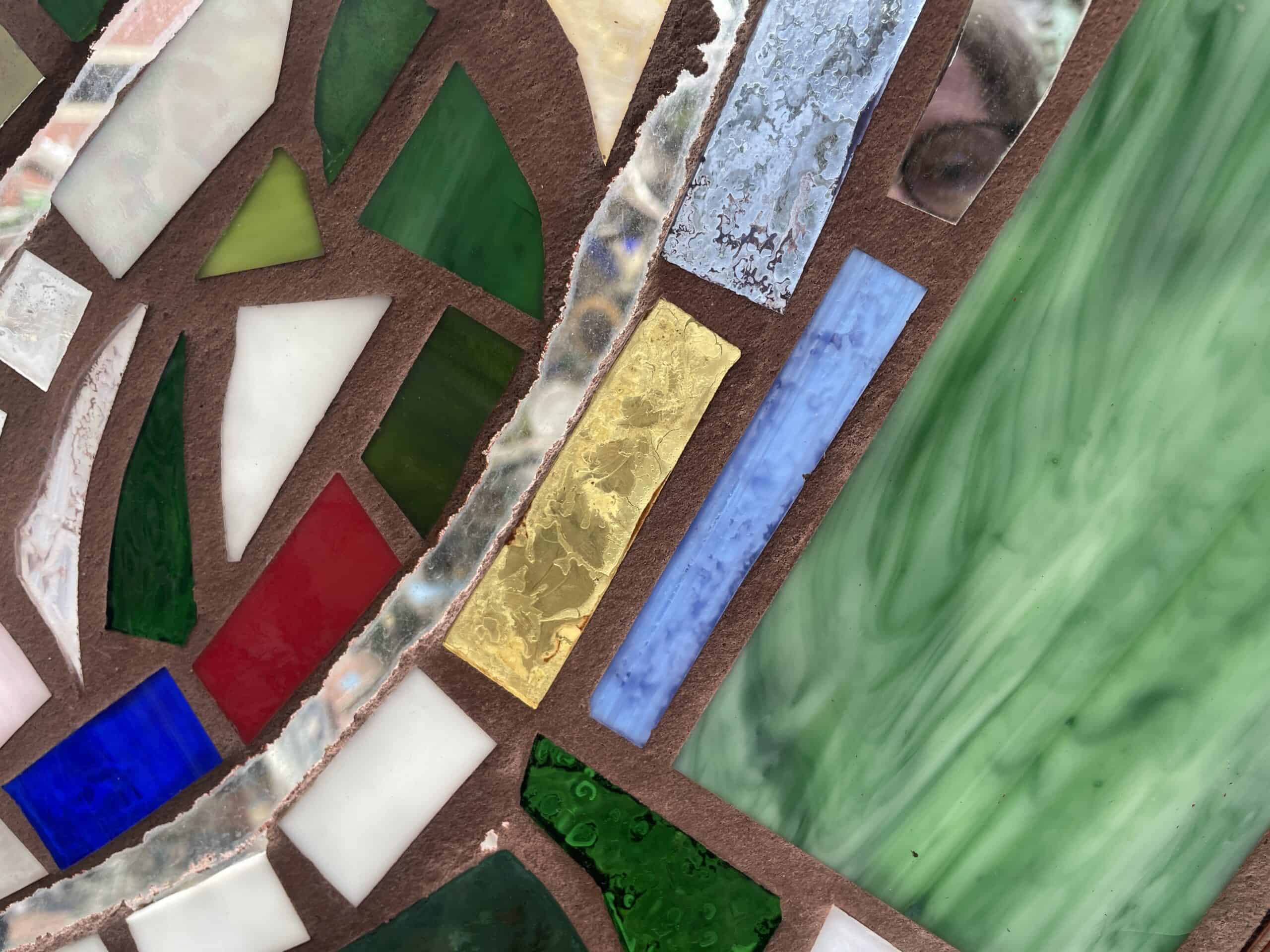
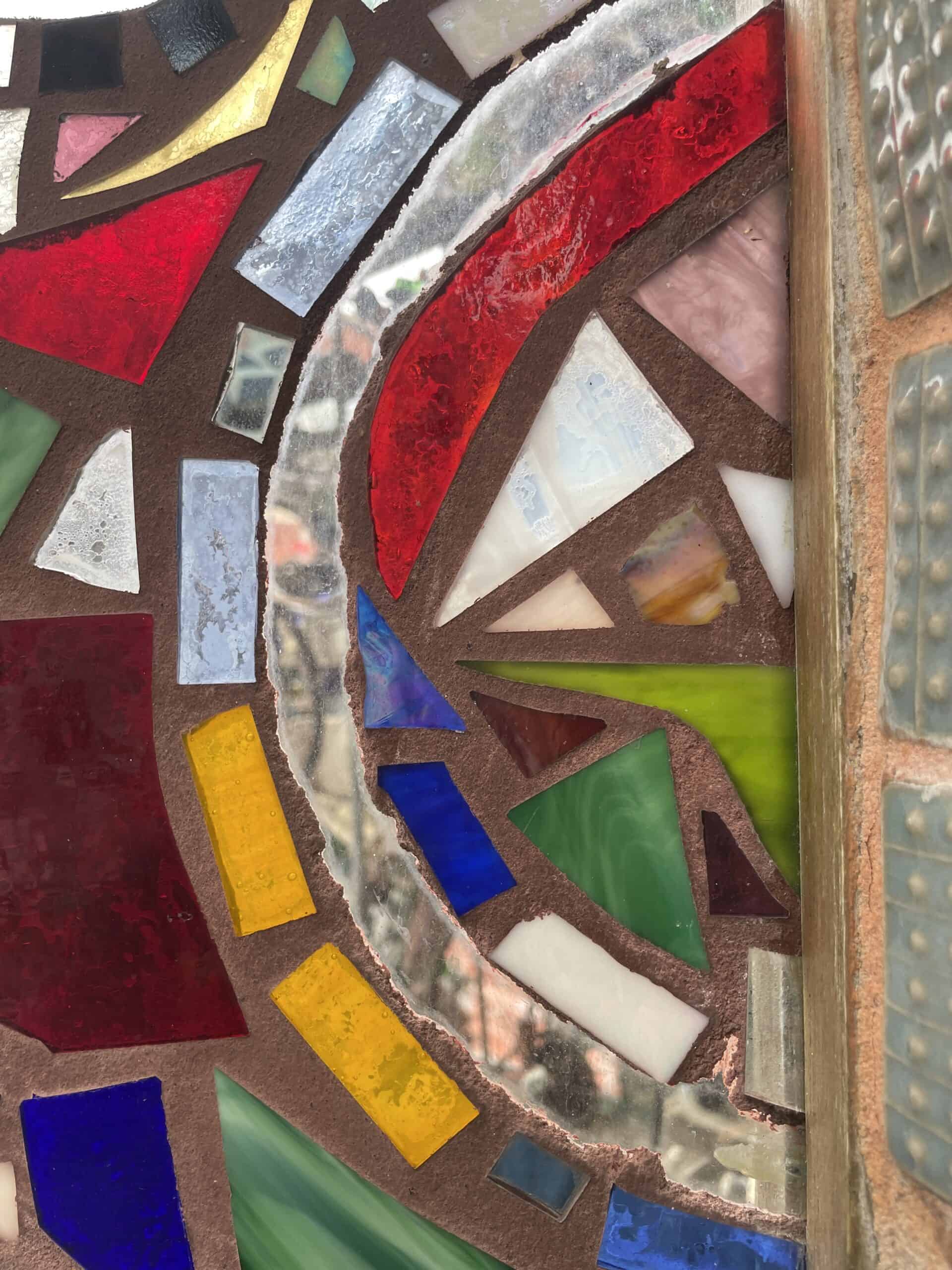
I am interested in grout lines (the interstices between the mosaic pieces) and how to use them in the design of a mosaic.

In one work where Zagar glued colored pieces onto  free standing clear glass.  Some of the grout lines he left transparent. An interesting blurred color mix appears from the background.

On other murals he used color on the grout cement to emphasize his design.

I am not sure what I shall think of “Art environments”. I find them usually a bit overwhelming and lacking in solid technique. My germaness is getting in the way, I guess.

On the other hand they bear details that are innovative and intrigue my interest. This is wonderful.